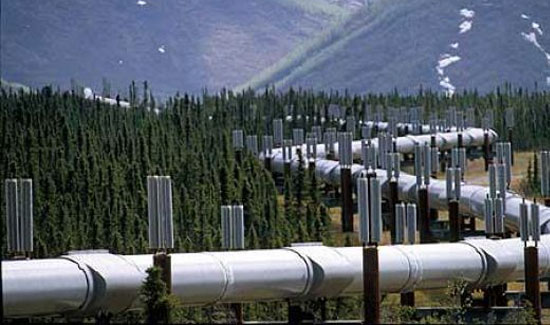
Canada Fast-Track Oil Pipelines while Cutting Regulatory Red Tape
Posted 13/07/2015 23:30
Canada’s premiers are poised to sign an agreement to fast-track new oil sands pipelines while watering down commitments to fight climate change.
The Canadian Energy Strategy will be finalized and unveiled at a premiers’ conference in St. John’s beginning Wednesday.
The confidential 37-page document lays out 10 goals and dozens of action items as part of a sweeping vision for the future of oil, gas and electricity across the country.
The creation of the energy strategy has been a long and belaboured process. The brainchild of former Alberta premier Alison Redford, it was first conceived in 2012 as a way to plan future oil-sands expansion and address climate-change concerns. The premiers have been crafting it for the past three years. The provincial leaders couldn’t have imagined that the agreement would come at a time of low crude prices, oil sands production cuts and economic angst in Alberta and the rest of the country.
Two sections of the plan commit the provinces and territories to help get more pipelines built, in part by cutting down on red tape to speed up regulatory decisions.
But the strategy contains little firm commitment on battling global warming. Its strongest environmental section – a pledge for all provinces and territories to adopt absolute targets for cutting greenhouse gases – is marked as a point of contention that might be scrapped.
Alberta has encountered problems in recent years expanding production of the oil sands because there is not enough transportation infrastructure for the added oil and bitumen. Various pipeline proposals – Energy East, Kinder Morgan, Northern Gateway and Keystone XL – have faced stiff opposition from environmental groups and First Nations. Some proposed pipelines have also been held up by regulators.
In section seven of the strategy, the premiers agree to “develop and enhance … transportation networks,” including oil pipelines and electricity grids, for both domestic consumption and export markets.
“As energy production expands to meet growing domestic and international energy demands, our country must have the necessary pipelines, electricity systems and other energy infrastructure in place to move energy products to the people that need them,” the document says.
Section eight commits the premiers to get approvals done faster. Provinces and territories, the document says, will “improve the timeliness and certainty of each jurisdiction’s regulatory approval decision-making processes for energy developments” in part by cutting “duplication and inefficiencies” between different jurisdictions.
There is vague environmental rhetoric peppered throughout the draft strategy, but no binding promises on exactly what the provinces and territories will do to fight climate change – only a general pledge to “transition to a lower carbon economy.” One section, for instance, lists a series of possible climate-change policies, including carbon capture and carbon pricing, but does not appear to require that provinces and territories do any of them.
There is also no explanation on how oil-sands production can expand – a likely scenario if more pipelines are built – while the country still reduces greenhouse gas emissions.
Source: www.theglobeandmail.com
Please leave comments and feedback below