Centrica CEO Plots Reversal of Fortune
Posted 03/08/2015 13:00
Self-confessed “oil man” — and a BP veteran — Iain Conn finds himself in an unusual position. Rather than build an oil and gas business, the chief executive of Centrica, Britain’s biggest domestic energy supplier, is preparing to do the reverse.
Seven months after he took over from Sam Laidlaw, who invested heavily in Centrica’s upstream arm, Mr Conn says that the company needs to pull back.
Following a review designed to halt a decline that culminated in Centrica reporting a £1bn net loss for 2014 and cutting its dividend for the first time since its creation, the new strategy will be to focus on energy supply and downsize the struggling exploration and production business. Six thousand jobs will be lost across the group, the owner of British Gas, to find £750m of savings.
This is a big statement from Mr Conn, whose predecessor invested £9bn in an upstream business that produces 217,000 barrels of oil equivalent a day.
In an interview with the Financial Times, Mr Conn says the problem for oil and gas producers has been a “fundamental” change in Saudi Arabia’s “attitude to market share”.
This is particularly true for groups such as Centrica in high-cost regions such as the North Sea. Low-cost producers in Opec, led by Riyadh, decided not to cut output last autumn in the face of a US supply glut, sending prices tumbling.
“Saudi Arabia appears to me to be saying, ‘The world isn’t going to use all of the hydrocarbons it has and, if it’s going to use them, it should be using low-cost, high-margin hydrocarbons, not high-cost, low-margin hydrocarbons’,” says Mr Conn.
“And Opec is saying, led by Saudi, ‘We are going to protect our ability, our franchise, to make sure?.?.?.?these low-cost, high-margin barrels will keep their market share’.”
At the same time, in the US, shale producers are using technology to drive down the cost of “unconventional” supplies. These two forces mean oil is likely to stay in the much lower $45 to $70 a barrel range — where a “battle for stabilisation is going to occur”, says Mr Conn.
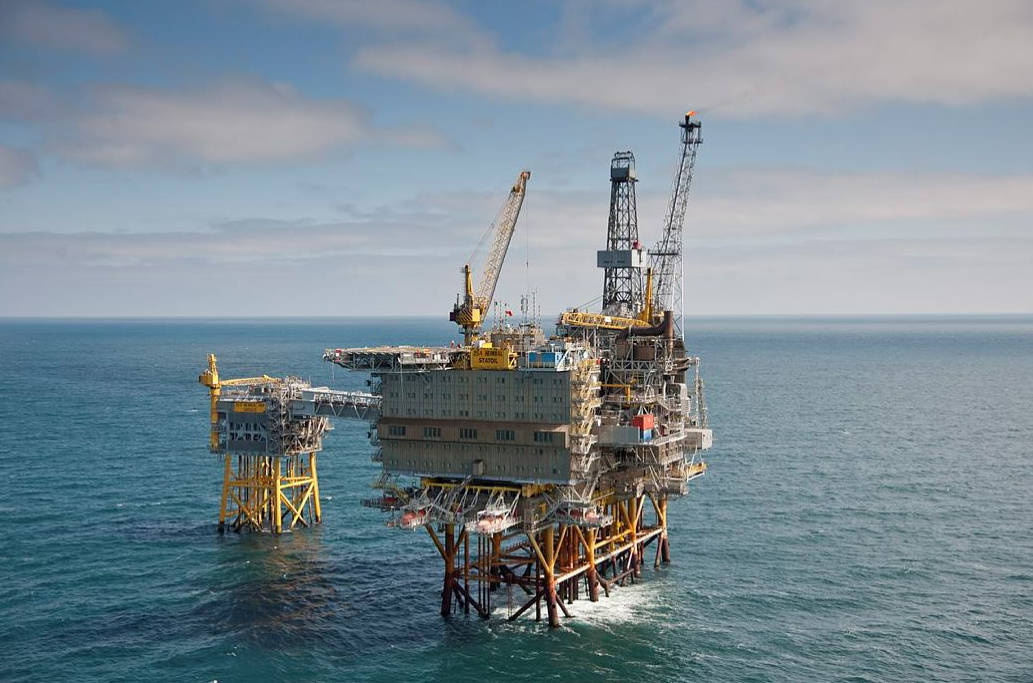
He discloses executives gave serious thought to exiting Centrica’s exploration and production business. Such a decision would have meant blanket withdrawal from the North Sea and Irish Sea, Canada and Trinidad & Tobago.
Instead he wants to keep a pared back upstream arm to preserve the company’s diverse earnings profile. So, while Centrica may pull out of Alberta gasfields, he argues it makes sense for the company to maintain a presence in the North Sea.
Centrica is well established in the region: the fields are near its UK energy customers and the company’s Norwegian assets are relatively young. But he adds: “It’s not easy and we’re going to have to work hard?.?.?.?I don’t rule out us optimising the North Sea.”
The aim is to free capital that can be diverted to Centrica’s “customer-facing” business. Mr Conn wants to focus more resources on efforts by 12,000 engineers to sell service deals to millions of UK and US customers.
Over the next five years, an additional £1.5bn will be put into energy supply and services, distributed power, energy markets and trading, and the “connected home” — the installation of devices, such as smart thermostats, that give people greater control over their energy use.
The strategy is similar to that of other European utilities trying to reinvent themselves amid lower energy consumption and increased competition from independent suppliers. But with Centrica losing accounts to rivals in the UK — 45,000 residential customers left British Gas in the first half of the year — analysts have questioned whether the investment can deliver targeted returns. Its shares dipped on the review’s publication.
Mr Conn dismisses such concerns. He points to the US, where 10 per cent of supply deals sold by Centrica’s Direct Energy business last year were “bundled with connected home solutions or new reports on how people use their energy”. With “satisfaction” scores high among 200,000 UK customers who have received smart heating controls, people “will pay more or stay more” because of the relationship they have with British Gas and its service engineers.
But will that happen if the planned 6,000 job cuts affect customer service? Mr Conn says job losses are unlikely to fall among the engineers, where numbers are being added. However, the group’s headquarters in Windsor, its upstream and power generation businesses and call centres could be affected.
“A big theme of all this is sharing resources. And Centrica has been organised in corporate islands,” he says. Half of the job losses will be managed through turnover and natural attrition, but half will be redundancies. The coming years will be tough, but there is now a blueprint for revival.
Please leave comments and feedback below