Statoil Look to Partner with Rosneft Without Touching Sanctions
Posted 08/08/2015 19:00
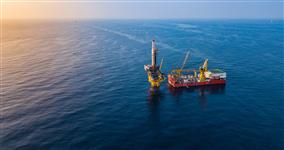
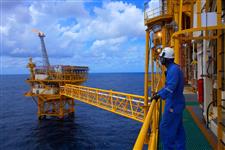
The Norwegian oil and gas company Statoil is looking for ways to expand cooperation with Rosneft without violating the sanctions regime. According to the World Oil, the company began to explore the possibility of drilling two wells in the Sea of Okhotsk next year, and would like to test the winter conditions of production at the North-Komsomolskoye field in the Yamal-Nenets autonomous district.
'We want to develop our relations with Rosneft' - says Statoil's executive vice president for international development, Lars Christian Baker. 'But we must do it within the boundaries, set by the sanctions.'
Statoil and other producers, such as Exxon Mobil and Royal Dutch Shell, deepen their penetration in the Russian oil and gas sector, trying not to disturb the sanction 'alarm'. Limits are set on the work of foreign companies in the Russian Arctic region, on participation in deepwater drilling and exploration of shale deposits and their development.
But with all this, Statoil considers Russia one of the five most promising countries for the cooperation in the next 10 years. The other four are Tanzania, Brazil, Canada and the United States.
Over the past decade, Statoil increased its foreign production seven times, says Bucher. The proportion of hydrocarbons, produced abroad, reached 40% in the second quarter of 2015. And as the company now for obvious reasons reduces costs, the proportion of overseas production will increase.
'In terms of the production, the growth will be given only by foreign development, - said Lars Christian Baker. - In the long term, the production in the Norwegian region can come to nothing at all, while other countries still have more than enough oil and gas.'
The pilot project in Siberia and two offshore wells are a part of a wider framework agreement, signed with Rosneft in 2012. While these projects don't violate the current sanctions, the companies won't be able to cooperate in the drilling at the Perseevsky licensed area in the Russian part of the Barents Sea.
Source: www.oilvoice.com
Please leave comments and feedback below